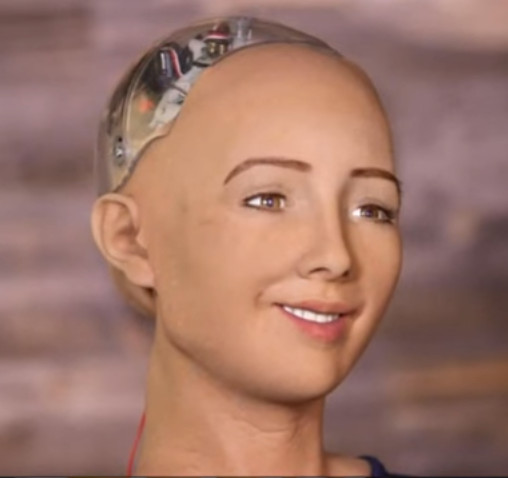
“Let’s buy an office robot” said a colleague when we sat to review staffing needs recently. This was a couple of weeks ago when we expanded our Silicon Valley office. ‘It is cheaper than the annual cost to company to hire an admin assistant”. He persisted. Initially I was taken a back, but trying to cover that up quickly, I asked, “what functions the office robot will do”. “A whole bunch of things. May not make the type of chai-tea you want, but it can do a number of routine office tasks” he replied. It was a new moment in discussing staffing needs. As this colleague of ours started sharing more details including pricing, the initial smile on the face of those sitting around started fading away. He was serious. He had joined us from a robotics company. We decided to evaluate this as also decided to put in a LinkedIn ad looking for resumes. We agreed to compare the costs!
Robotics is a reality today. So is Artificial Intelligence (AI). These things are no more science fiction. Whenever discussions happen about AI disrupting legal space; our lawyer friends put on a defensive hat. How can computers replace the deep expertise of lawyers. They don’t realize it is a matter of time they stop reading those hard bound law books and turn to computer dashboards for decision boxes. Remember a time when medical doctors used to spend significant amounts of time checking vital parameters of patients and diagnose disease conditions solely on the basis of their physical examination of patients. Today it is highly unlikely that a specialist doctor would ever prescribe medicines to a patient without seeing a whole bunch of reports. All those reports are generated by machines that use advanced software tools. Connecting those machines to output correlated medical data, and making it available on cloud will obviate the need for patients to go through those tests multiple times. Also this can make treatments place and doctor independent. That’s the big data play unfolding in in health care industry. So if software and AI are making deep inroads into the medical profession, and health care industry, why not legal. It is a matter of time.
Back home last week, Pratap was talking about the difficulty in having two separate machines, one each to wash and dry. That led us to chat about inter-connected machines. He didn’t believe that time is nearing when washing machines, refrigerators, televisions, air-conditioners, electric bulbs and just every machine will start talking among themselves and including your phone. He kept smiling. Just to tease him I spoke into my phone and asked Siri to call Pratap. His phone rang. He uses a smart phone. But he didn’t know about Siri. I asked what’s the weather in Delhi. Siri said what it is. Then I showed him a video on Tesla’s features. Slowly he started buying into the idea of self-driving cars, pizza delivering drones, and home machines talking to each other.
Now he is curios. He wants to know if we can buy a robot for home. Imagine a robot moving around your home, waiting for newspapers to come, collects and places them on the table, go and brings the tea tray, sprays water into flower pots, water the indoor plants, open window curtains, turn on lights, turn off ACs, and doing a variety of pre-programmed tasks, just every day. This is a reality that’s nearing. Just as ‘Singularity is nearing’, a topic I wrote about earlier of a time when the collective computing power of chips will overtake the collective intelligence of humans.
How people name Robots will be an interesting thing to watch for. Probably it makes business sense to start a website with suggested names for robots. We will call our office robot ‘Kuttappan”.
 Mind, Matter & Musings